


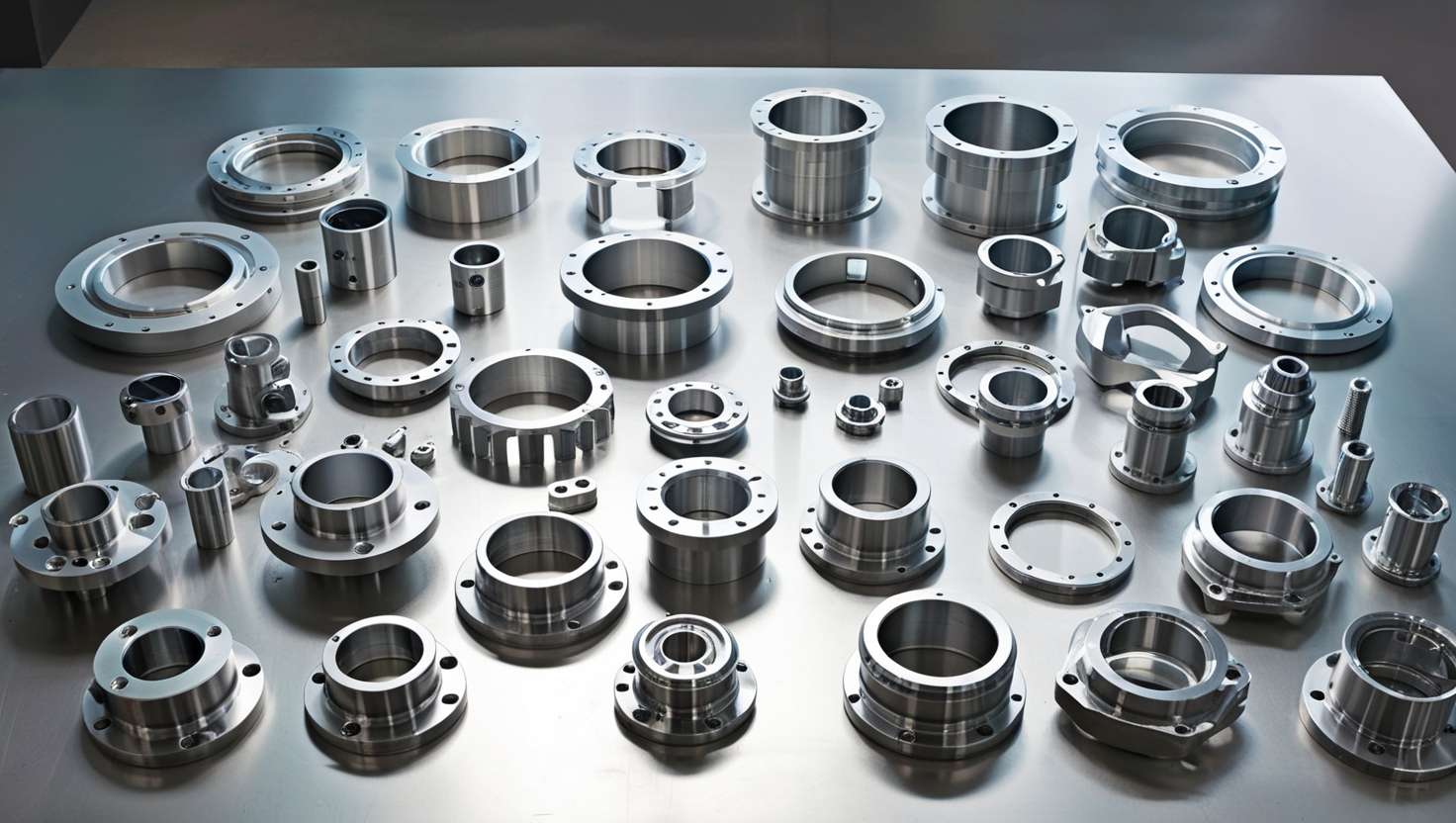
Aluminum is one of the most widely used metals in CNC machining—and for good reason. It’s lightweight, corrosion-resistant, and easy to machine, making it ideal for industries where precision and durability are non-negotiable. From aerospace and medical devices to automotive engineering, aluminum parts are trusted for their reliability and performance.
In this guide, we’ll explore the key characteristics of aluminum, the most common CNC-machined aluminum parts, and the quality standards manufacturers must meet to ensure long-lasting results.
Aluminum offers several unique benefits that make it the go-to choice for CNC machining:
Lightweight & Flexible – Easier to machine, transport, and integrate into high-performance systems.
Corrosion-Resistant – Naturally resistant to oxidation, ensuring durability in harsh environments.
Non-Magnetic & Non-Combustible – Safe to use in medical and aerospace applications.
High Thermal Conductivity – Effective for heat dissipation in electronic components.
Cost-Effective & Recyclable – Affordable to produce, with excellent sustainability benefits.
Because of these properties, CNC-machined aluminum components can be found everywhere—from aircraft frames to consumer electronics.
Aluminum brackets are among the most popular parts for crafted through CNC process. They are the backbone of all mount supporting and linking components of machines. Applications vary from static support in assemblies within aerospace to mounts that will carry various automotive sensors and actuators. Brackets are usually made according to a specific geometry and carrying load requirement, so they become the most important and common subjects for high-precision CNC machining.
Another very important type of parts includes enclosures and housings. Enclosures are mainly concerned with safeguard sensitive electronic or mechanical mechanisms of dust and moisture and threats from other environmental factors. Precise machining has assured a perfect reach for connectors, seals, and components inside the enclosure. Be it a control box of an industrial robot or a casing of devices for medical diagnostics, aluminum CNC enclosures deliver the perfect combination of qualities as they are lightweight and dissipate heat easily.
Heat sinks substantially make a portfolio of aluminum CNC components. It is heat conduction that makes aluminum so effective as a natural agent in cooling high-power electronics and LED lighting systems. Precision CNC milling guarantees maximum surface area and very tight tolerances.
Engine mounts are responsible for fastening the engine to a vehicle's frame and absorbing engine vibrations and road shock. Aluminum CNC engine mounts are light and very strong, highly preferred for aviation where reducing weight comes first. Since these are specifically made per the requirements of the vehicle, CNC machining gives perfect alignment of the mount with both the engine block and chassis, providing stability even under high torque and rapid acceleration. In performance applications, these mounts are sometimes custom-designed to have higher stiffness for better feedback and decreased engine movement.
Suspension arms, or control arms, are responsible for keeping wheels in the alignment arrangement and allowing smooth movement of the suspension system. Racing, off-road, and high-end performance CNC aluminum suspension arms benefit from their high tensile strength coupled with light weight. CNC work translates into tight tolerances and uniform thickness, thus giving performance-related consistency and hence predictable handling.
The flow and direction of fluids or air are controlled in hydraulic and pneumatic systems by valve bodies. They are complex components with internal channels, ports, and cavities that have to be machined with very high accuracy so that they can operate without leaking and control flow optimally. Because of aluminum's corrosion resistance and resistance to deformation under pressure, solutions involving CNC-machined aluminum valve bodies are widely applied to machinery, construction equipment, and industrial automation. Smooth internal surfaces provided through CNC milling will reduce turbulent flow and wear, while custom porting and threading will facilitate easy integration of the valve body into a variety of differing systems.
Manifolds serve as distribution hubs in hydraulic and pneumatic systems, allowing the flow of fluids or air from one source to multiple outputs. These components must withstand rigorous internal pressure while upholding accurate internal geometries for balanced flow distribution. CNC machining will enable accurate work on intricate internal passages and mounting surfaces of aluminum blocks. From their designs, engineers can guarantee the manifolds will reduce pressure drops and optimize flow paths, promoting increased system efficiency.
The cylinder head is a core of the combusiotn egine and acts as secure seal of the combustion chamber. It experiences difficult thermal and mechanical environments due to constant ignition cycles and high internal combustion pressures. Focusing on performance and aviation engines, aluminum is a great option as a cylinder head. The cylinder head has a low mass and has a high thermal conductivity to boost engine performance. A precision-manufactured cylinder head will fit over the chamber ship flawlessly and seal the combustion chamber adequately for a reliable engine performance that will ensure long engine service life.
CNC machining aluminum is also well-suited for prototyping and lower-volume runs. An engineer can create a functioning, prototyped part quickly to test the fit, form, and function before going into mass production. Aluminum is an inexpensive metal, so manufacturers can afford to make mistakes during iterations without incurring too much expense.
Manufacturing prototype parts is really effective for startup manufacturing firms that make electronic items, like wearable technology. In such manufacturing, it is easy to fine-tune product performance through tailored applications of manufacturing.
Producing aluminum precision CNC parts consistently to respective tolerances requires a proper quality assurance and quality control program and compliance to international standards. Depending on the function of the component, tolerances can range from a few microns to a fraction of a millimetre. Standards and regulations are placed by government bodies that aerospace and defence companies are obligated to meet (i.e, AS9100), and a large number of automobile manufacturers (i.e., ISO/TS 16949).
Inspection systems and advanced measuring tools are used when inspecting parts both in the design process and manufacturing process, including coordinate measuring machines (CMM), laser scanning, and digital backlit calipers. These tools are needed to inspect tolerances to ensure consistency, even on complex geometries across the whole production line. Components designed for reliability, such as selected in safety critical systems i.e., aircraft engines, aircraft braking systems, or Diathermy surgical equipment, are not only a competitive advantage to manufacturers and service providers but is a regulatory requirement.
Aluminum’s versatility, durability, and cost-effectiveness make it one of the most valuable materials in CNC machining. Whether it’s a simple bracket or a high-performance engine component, CNC-machined aluminum parts deliver the precision and reliability industries rely on.
With advancements in technology and sustainability practices, the role of aluminum in aerospace, automotive, medical, and industrial applications will only continue to grow.
Ductile cast iron is now rated as the essential part of creating durable components for vehicles and industrial equipment. The combination of this material with the casting benefits of conventional cast iron is strong, and it is also made of steel. To produce high-quality ductile iron components, casting and engineering procedures must be considered. Knowing these techniques can assist manufacturers in developing parts that cost-effectively meet the intent of holding up performance requirements. What is Ductile Cast Iron? What Makes It Different Ductile cast iron is differentiated by its inner structure as compared to cast iron. Regular cast iron absorbs graphite in flat flakes, which makes it brittle. Ductile iron is graphite, which is composed of nodules or spheroids. Such round figures provide the material with flexibility and hardness. The nodular structure enables ductile iron to bend but not to break. Compounds can withstand hits and pressure that would break normal cast iron. This made ductile iron valuable across a wide range of industries due to its combination of castability and mechanical properties. Key Material Properties Ductile cast iron machine parts has similar strength to most types of steel. It is wear-resistant and vibrates well. The material compared favorably with steel, making production easier and minimizing production expenses. Its sound-dampening properties make it suitable for engine blocks and housings. Ductile iron is available in varying grades and has its uses. Some grades stress strength, whilst others emphasize ductility or wear resistance. The casting method should be selected based on the desired grade and use. The Essentials of the Melting Process Effective Base Iron Preparation. Production of good-quality ductile iron begins with the base iron composition. Iron, having controlled carbon and silicon content, should be formed in the melting process. The sulfur level must remain low, as it blocks the formation of nodules. Electric induction furnaces or cupola furnaces are mostly used in foundries. Electric heating furnaces offer increased temperature and composition control. The molten iron is heated at temperatures of between 1400 and 1500 degrees Celsius. The same temperature is maintained during the melting process in order to have uniform quality. Inoculation Treatment A small portion of materials that facilitate the formation of proper graphite is added through inoculation. The most popular inoculant is ferrosilicon. The molten iron is then inoculated with an inoculant, which creates nucleation points that form graphite nodules. The time of inoculation is very important. Before casting, the addition of inoculant leads to the effect disappearing. Since it is added late, proper distribution is not possible. Several stages of inoculation are effective for complex castings. Nodularization Process Magnesium Treatment To convert base iron into ductile iron, magnesium is added. This factor causes carbon to form nodules rather than flakes. The most important step is the magnesium treatment, which is what gives ductile iron its special properties. Adding magnesium to molten iron results in a violent reaction. This is controlled by special ladles with reaction chambers. Magnesium can be introduced as pure metal, alloys, or through wire feeding techniques. The two methods will be beneficial in diverse production scenarios. Treatment Methods The sandwich technique places magnesium at the bottom of a ladle, then adds iron on top. In the plunging technique, magnesium wire is plunged into molten iron. Converter methods are applied to large amounts in special vessels. The choice of method is based on production rate and the need for parts. The effect of proper treatment results in magnesium remaining in the end iron. Magnesium is present in insufficient amounts to fully nodalize. Oversaturation of magnesium can lead to defects in castings. A balance is attained by careful calculation and control. Mold Making Considerations Green Sand Molding Green sand is the most popular ductile iron molding. Clay and water are used as binders in the sand mixture. The molds form around patterns and solidify to the point that they support molten iron. Green sand molds can be easily reinforced and recycled at high production rates. The sand breathes, releasing gaseous contents during solidification. The last construction defects are prevented by proper sand composition and moisture control. Frequent testing maintains the consistency of mold quality. Resin-Bonded Sand Systems The chemical binders form more accurate and tougher molds than the green sand. Cold-box and no-bake processes make use of resin binders that cure at room temperature. Such molds provide superior dimensional and surface finishing. Molds bonded with resin are a good choice for complex designs and narrow tolerances. The hard molds do not yield to the pressure of metal as green sand molds do. They are, however, more expensive and are not easily recycled. The point at which these techniques can be applicable depends on production volume and part requirements. Pouring and Filling Techniques Pouring Temperature Control. Proper pouring temperature is a critical quality issue. Too high a temperature causes excessive oxidation and gas absorption. Excessively low temperatures result in partial filling and cold shuts. Depending on the size and complexity of parts, temperatures can differ. Before pouring, pyrometers are used to measure the temperature of the iron. Repetitive heating results in a constant temperature. Foundries handling large quantities of castings employ the automated pouring systems where temperature and flow rate are strictly controlled. Filling System Design The presence of molten iron in the mold cavity affects the quality of the parts. The gating system should seal cavities and cause as little turbulence as possible. Oxidation and gas entrapment, which form porosity, are due to turbulence. In bottom gating, the metal is introduced smoothly. Side gating is applicable in a variety of applications. Top pouring suits are easy to shape and prone to more turbulence. Gating optimization of complex parts is optimized using computer simulation. Cooling and Solidification Controlled Cooling Rates Speed of castings on microstructure and properties. Fast cooling would result in hard, brittle regions. Cooling extremely slowly can result in undesired graphite shapes. The best cooling rates will depend on the section thickness and the desired properties. Mold materials affect cooling rates. Sand molds cool castings more slowly than metal molds. The quickening of cooling by adding chill metal inserts to molds. This orientation solidification inhibits flaws such as shrinkage porosity. Managing Section Thickness Thick sections are more difficult to solidify than thin ones. This variation poses difficulties in complicated castings. When isolated, heavy parts cool last and draw metals away, causing shrinkage cavities. Shrinkage-prone areas are fed by risers, which are reservoirs of additional molten iron. The riser design adds extra metal to these critical parts during solidification. Internal voids are avoided by properly positioning the risers and controlling their dimensions. Conclusion Ductile cast iron parts require close attention during casting, as the process demands high precision during both preparation and final cooling. These casting methods and interactions also enable manufacturers to make credible ductile iron parts continuously. These can be used in demanding applications in the automotive, industrial, and infrastructure industries.
READ FULLSome industries are just getting better and more agile as the technology is growing. These industries have one thing in common, and that is the use of aluminum components. They use aluminum precision CNC parts that are excellent, corrosion-resistant, durable, lightweight, and compatible. Their high precision comes through their brilliant machinability for mass production. Not every grade, but some grades like 6061, 6063, 7050, and 7075 are compatible with these industries. These grades comply globally, and when precision is added to them, the aluminum parts become top-grade. Therefore, these are some of the top industries that use aluminum precision parts made by CNC machines. There is a reason why the die casting process is absent in their production. However, some may get the die casting process, but then CNC machining is mandatory in it. It is the precision that comes only from CNC machining. The cost is surely higher than the die-casting process, but it is about the elite quality of parts. That quality can only come when one goes for CNC machining. Here is the explanation. Electric Vehicle Industry EVs are having a substantial share in the transportation sector, especially in North America, Europe, and Asia. Countries like China, the USA, Japan, and Germany are having the most EVs right now. The reason they are relying on them is because of low-cost transportation and lightweight structure. Aluminum precision CNC parts contribute well to the EV industry. Lots of components like gears, fasteners, and structural parts are made of aluminum. CNC machines provide precise details with consistency in each component. That leads to lightweight, efficient, compatible, and durable performance from these components. Which Aluminum Grade is Used in Electric Vehicle Components? They use aluminum grade 6061 in it. Its excellent corrosion resistance makes each part survive moisture and chemical threats. This grade increases the machinability of aluminum components. Also, they get heat treatability for better performance in EVs. Defense and Ammunition Sectors The defense sector has always been active worldwide, and it received an extra boost in 2022 and even more in 2023. Due to high demands for arms and ammunition, the demand for aluminum precision CNC parts also increased. Drones were the red-hot defense weapons in these years, as they automated many aspects of warfare. Many advanced defense drones were used, and their lightweight structure relies on aluminum parts. Aluminum precision CNC parts, such as structural, aerial, and supporting components, must be lightweight for quick flights. Therefore, this industry has substantial consumption of aluminum in the production of advanced weapons. Which Aluminum Grade is Used in Defense Industry Components? The defense industry uses aluminum grades such as 7075 and 6061 to produce countless machines. They need precision, and CNC machining delivers it. Besides, aluminum 7075 and 6061 offer excellent corrosion resistance, machinability, and durability. Likewise, many structural components, casings, frames, fasteners, and supporting components are manufactured using CNC machines. Automation and Robotics Another recent entry was automation and robotics, besides EVs. Industries use robots that reduce labor costs, time, and errors in the production process. Lots of robotic arms, AGVs, and similar automated machines have aluminum parts. The reason is the high compatibility and lightweight structures of these robotic machines. They are easy to install and repair, which is why manufacturing industries are slowly replacing manual operations with automatic modes. Repetitive tasks are becoming low-cost and efficient with the help of robots. Which Aluminum Grade is Used in Robotics Components? The reason industries use them is because of the corrosion-resistant aluminum parts. They use aluminum 6061, 6082, and 7075 grades that provide durable performance. Likewise, these robotic components, like joints, grippers, and fasteners, are lightweight and precise. CNC machines work easily with these grades to manufacture many components that comply with robot requirements. Aerospace and Automotive Industries These two industries have consistently grown. The world needs transportation, and these two meet the requirements. Since the machines are becoming more advanced, their components are also becoming more precise, lightweight, and corrosion-resistant. Industries use aluminum precision CNC parts in their production processes. They get consistent sizes, dimensions, and performance from all the CNC-machined parts they use. Which Aluminum Grade is Used in Aerospace and Automotive Parts? Aluminum 7075 and 7050 are common in the aerospace industry. These grades offer excellent strength and corrosion resistance to aircraft. Besides, 6061 and 6082 grades are popular in automotive parts. Their corrosion resistance and easy machinability make them compatible with the automotive industry. 7075 is an aluminum and zinc alloy, which is why it is lightweight and highly durable for the aerospace sector. Gears, shafts, housings, engine components, fasteners, and many transmission components are made of aluminum. Therefore, the reliance of these two industries on aluminum precision CNC parts is high. Medical Industry When we discuss the medical industry, the first thing that comes to mind is biocompatibility. Aluminum precision CNC parts meet all requirements of the medical industry, whether it is about medical machine components, surgical instruments, or prosthetics. Since medical machines have to be lightweight in some applications, they need aluminum components inside. Industries manufacture them with high precision to offer safe and efficient results for the welfare of patients. Which Aluminum Grade is Used in Medical Instruments and Prosthetics? 6061, 6063, and 3003 are the three common grades of aluminum used in the medical industry. The reason why they are compatible is because of their anti-corrosion and lightweight nature. The biocompatibility comes from these three grades, which make the aluminum precision CNC parts safe for patients. Conclusion These industries are highly inclined towards aluminum precision CNC parts, and there are various reasons behind it. They want lightweight mechanisms in their machines, which come mostly from aluminum. Then the machinability factor comes, which makes aluminum suitable for CNC machines. Its grades like 3003, 6061, 6063, 7050, and 7075 are highly machinable and corrosion-resistant. The 7000 series makes aluminum parts excellent in durability, especially for the aerospace and automotive industries. Also, the defense industry uses this grade for heavy-duty performance. Combining all these features, aluminum precision CNC parts are very reliable for these industries.
READ FULLDuctile iron has now become a favorite material for the production of industrial machines and parts. Ductile iron machines, when developed with CNC (Computer Numerical Control) technology, achieve a level of accuracy and serviceability never before seen. This great mix changes manufacturing capacities and enables the production of better machine components, which are stronger and have greater operational capacity than those manufactured periodically. Learning Ductile Iron Properties Nodular or ductile iron has special qualities that make it the best for machine production. Ductile iron is strengthened and flexible compared to regular cast iron, as it possesses spherical graphite nodules that provide it with strength. This substance fractures more readily under pressure than traditional cast iron and is also an excellent casting material. The material is of high tensile strength and decent ductility. This implies that ductile iron materials can withstand the weight of items without cracking or breaking. The material is also very effective in dampening vibrations, and hence it is ideal in the base of machines and structural parts that require stability when in use. What Is CNC Technology? CNC technology applies the use of computer-controlled machines, which cut, shape, and finish the materials with a very high level of accuracy. Rather than cutting tools being operated by hand, computers are being used to execute accurate movements by following the programmed instructions. Such automation eliminates human errors and non-uniformity during the manufacturing process. The digital design files are sent to computers that precisely control the movement of tools in accordance with the intended CNC machine designs. The computer controls cutting speed, depth, tool location, and feed rate with an accuracy of thousandths of a millimeter. Such precision could not be achieved with traditional manual machining methods. The possibility of Unprecedented Precision CNC technology significantly increases the accuracy of ductile iron machine parts. Conventional machining relied on operator skill and manual measurements, which added variation between parts. CNC eradicates such irregularities by adhering to precise online specifications on each item. Contemporary CNC machines can achieve tolerances of 0.001 millimeters. Such high accuracy results in perfect part fit and no gaps or misalignment. Consistency of restraint reduces friction, eliminates early wear, and enhances the machine's performance. Uniformity Between Production Runs CNC technology makes the same parts regardless of the number. The original piece produced is identical to the one produced, which is a thousandth of a second. Such consistency is important when there are interchangeable elements or replacement parts in machines that must be precisely compatible with the existing assembly. This level of consistency could not be ensured by manual machining. Minor differences in operator skill, tool life, or measurement imprecision produced part-to-part variation. CNC removes these factors, and each part is made with precision. Complex Geometry Creation CNC machines develop distinctive forms and complicated details that cannot be produced by hand. Multi-axis CNC machines can produce curved surfaces and angled holes, as well as complex patterns, with laser-precision accuracy because the cutting tools can move in multiple directions. This is to enable the designers to idealize ductile iron machine parts for specific tasks. Internal channels, precise mounting surfaces, and well-thought-out stress distribution attributes can make up parts. These are design advancements that improve performance and, eventually, the life of a machine. The Quality of Surface Finish Surface finish influences not only the appearance of ductile iron parts but also their use. Unsmooth surfaces act as friction points, which enhance the process of wear. Even finishes enhance smooth surfaces, reduce friction, improve sealing, and extend component life. CNC machining provides a higher-quality surface finish than the manual process. Cutting speed and feed rates are controlled by computers to achieve maximum material removal without tearing or gouging. The steady force of the tool and motion produces even finishes on complete surfaces. Reducing Material Waste CNC technology reduces material waste in the manufacturing process. The computer will determine the optimal cutting paths, leaving no redundant material. This is efficient at preventing scrap and uses less costly, ductile-iron castings. Accurate cutting eliminates the secondary finishing processes as well. Components produced by CNC machines are closer to final specifications and require less grinding, polishing, or other machining. This efficiency saves on time, costs, and quality. Strengthening Structural Leadership CNC machining of ductile iron enables the machinist to enhance the structural integrity of components without compromising the material's internal structure. The technology also allows the development of features that evenly distribute stress among components and avoid weak points that are prone to breaking under stress. Computer-controlled cutting maintains consistent wall thicknesses and prevents stress concentrations. Hand-machined parts would occasionally produce irregular shapes or curved inside corners where cracks may form. CNC eliminates all these issues through programmed tool paths. Facilitating Advanced Quality Control CNC technology is compatible with the modern quality control system. Various CNC machines have measurement probes that monitor sizes when machining. Such automatic checks detect the defects as soon as possible, before flawed pieces are manufactured. All manufacturing stages are documented digitally. These records give precise specifications, cutting parameters, and inspection results of each component. This traceability enables fast identification and correction of issues and demonstrates adherence to quality standards. Extending Machine Lifespan The ductile iron machine life is directly proportional to the accuracy CNC machining offers. Particles designed to meet strict accuracy standards come together in the right size, thus lowering stress and trade. Actual alignment eliminates binding, vibration, and untimely failure. Resilient surfaces achieved through CNC machining minimize friction between moving parts. Reducing friction reduces heat production and inhibits rapid wear. Components have correct clearances that are sustained over the extended periods of service in the machine. Enabling Design Innovation CNC technology also allows the designer to develop optimum ductile iron machine parts without concerns of the constraints of the manufacturing process. Such complex details that would be inconvenient or costly to produce manually are now feasible with CNC. The result of this design freedom is a lighter, stronger, and more efficient machine. Engineers can reinforce at the point of need, but not build up the entire component. Weight loss improves energy efficiency and machine performance while maintaining acceptable strength. Conclusion CNC technology transforms ductile iron into a new material, enabling the accuracy and consistency that manual methods cannot achieve. Ductile iron has great material properties coupled with CNC, which leads to better machine parts that have a longer lifespan.
READ FULL