


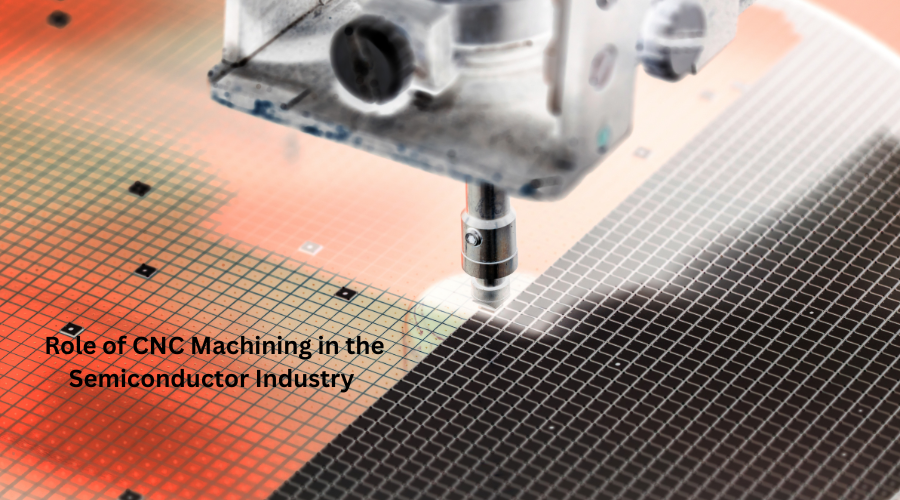
Precision is critical in the semiconductor industry. Not only be good, but also be very precise. The components of equipment used in chip manufacturing are measured in micrometers. Even the tiniest of imperfections can ruin an entire rendition. This is the reason why CNC machining has become one of the key manufacturing processes in this industry.
The name CNC is another acronym for Computer Numerical Control. It possesses computer programming to operate a machine tool with very high accuracy. It's no luxury in semiconductor applications; it's a requirement.
The production of chips takes place in special facilities known as cleanrooms. These cleanrooms house very precise machines. They work with wafers: very thin silicon slices containing millions of little circuits.
All of the parts of this kit must be precision-manufactured. Even slight misalignment, contamination, or vibrations can occur when this part is out of tolerance. All of these problems have the potential to ruin thousands of dollars' worth of wafers. This is why the parts in semiconductor equipment are subject to standards that most industries don't need to achieve.
Manual machining can't match the consistency of CNC machines. After programming and verification, a machine will adhere to the same cutting path thousands of times without deviation. All components are identical to each other.
The tolerances of ±0.005mm or tighter are commonly seen in semiconductor applications. This can be done easily with this type of machine. The five-axis CNC can tighten the specs to its next level by approaching the workpiece from various angles in a single setup. This reduces the likelihood of errors caused by repositioning the workpiece.
Many semiconductor equipment manufacturers require hundreds of identical parts. CNC machining provides the same effect, the same time, every time. This repeatability is essential for the long lifecycle of equipment with consistent performance.
A variety of difficult materials are used in the semiconductor industry. They require different cutting methods and tools for their machining.
This is used when strength, corrosion resistance, and cleanliness are required. It machines more slowly than aluminum and produces more heat when cutting. Good coolant handling and correct tool selection must go hand in hand to obtain a clean, accurate result.
These are among the toughest materials for semiconductor equipment. They are extremely resistant to heat and chemical attack. They, however, are brittle and highly unworkable. CNC grinding and precision milling by diamond-tipped tooling is required. They are very difficult to machine, even in the most advanced machining facilities.
It is used for components that require transparency to certain wavelengths of light. It is sensitive to cracking if not cut properly. Slow speeds, accurate feeds, and careful fixturing are required to manufacture quartz parts without damage.
What is the significance of surface finish in semiconductor parts?
The surface finish of semiconductor parts goes far beyond looks; it impacts purpose. Particles tend to cling to rough surfaces. Inside a clean room, minute particles can get on the wafers and affect the performance of chips. Polished, smooth surfaces are easier to keep clear and do not emit or accumulate pollutants. The ultra-smooth surfaces required by semiconductor equipment are often achieved using this CNC machining method, followed by grinding, lapping, or polishing to a nanometer-level of roughness.
Components used in semiconductor manufacturing equipment are produced by CNC machining. They are used in all of the following important applications.
A large number of semiconductor processes take place in vacuum chambers. The various chambers and the parts inside must be carefully dimensioned, tight, and very clean. CNC machines the flanges, housings, and internal components.
Various gases are supplied to semiconductor processes, and they should be delivered uniformly across the wafer surface. The internal channel geometry of gas distribution plates, showerheads, and manifold systems is complex. These complex flow paths can be achieved reliably and precisely via CNC machining, typically in a 5-axis configuration.
Temperature control is a critical parameter in semiconductor processing. The temperature distribution is a critical factor in assessing heater plates, cooling blocks, and thermal chucks. The CNC machining service creates a consistent thermal performance by making a flat, smooth surface and a channel network inside the parts.
Holding sensitive equipment in precise alignment with frames, brackets, and mounting plates. Any dimensional variation in these structural elements will affect the alignment of the entire system.
Is CNC machining appropriate for use in cleanroom environments?
Component parts intended for use in the cleanroom need to be machineable, cleaned, and packaged, with contamination being a concern. This involves selecting cutting fluids without harmful residues, ensuring that parts are carefully cleaned after machining, and then packaged in sealed bags, cans, or containers before entering the clean room.
Semiconductor service post-machining cleaning processes are costly, as are cleanroom-compatible packaging. It is equally crucial to select a supplier that is aware of all these requirements.
Creating a part with tightly specified tolerances is not easy. Another is to verify that it meets those tolerances. For semiconductors, inspection is a must.
CMMs are used to check dimensions with high precision. A surface profilometer is used to measure surface roughness. Sometimes the features to be checked, whether too small or too complicated, are not suitable for contact measurement.
The manufacturer of semiconductor equipment insists on complete documentation of each part. These include material certificates, inspection reports, and any recorded post-machining treatments. This traceability makes it possible to identify where a problem arises in the field easily.
What we see in the future of CNC machining in the semiconductor industry?
The semiconductor industry isn't going anywhere. The size of the chips is decreasing! There are more and more complicated equipment options. Relying on machined parts is becoming increasingly challenging every year.
Advances in CNC technology parallel the demands. It is getting more accurate from the machine. Humans aren't causing the errors that automation addresses. Higher value and more difficult-to-machine materials are becoming possible with new tooling and cutting techniques.
CNC machining is more than just a semiconductor manufacturing process; it's a base! If not, the world's chips could not be manufactured using the necessary precision in the equipment.
CNC machining is used in practically every aspect of semiconductor equipment, such as vacuum chambers, wafer handling arms, gas distribution plates, and thermal management elements. It provides the close tolerances, smooth surfaces, and quality consistency that this critical industry standard requires. CNC machining explained enables both manufacturers and buyers in the semiconductor industry to make informed decisions related to design, materials, suppliers, and quality.
Precision is critical in the semiconductor industry. Not only be good, but also be very precise. The components of equipment used in chip manufacturing are measured in micrometers. Even the tiniest of imperfections can ruin an entire rendition. This is the reason why CNC machining has become one of the key manufacturing processes in this industry. The name CNC is another acronym for Computer Numerical Control. It possesses computer programming to operate a machine tool with very high accuracy. It's no luxury in semiconductor applications; it's a requirement. Semiconductor Manufacturing Is in Demand The production of chips takes place in special facilities known as cleanrooms. These cleanrooms house very precise machines. They work with wafers: very thin silicon slices containing millions of little circuits. All of the parts of this kit must be precision-manufactured. Even slight misalignment, contamination, or vibrations can occur when this part is out of tolerance. All of these problems have the potential to ruin thousands of dollars' worth of wafers. This is why the parts in semiconductor equipment are subject to standards that most industries don't need to achieve. How CNC Machining Meets These Standards Manual machining can't match the consistency of CNC machines. After programming and verification, a machine will adhere to the same cutting path thousands of times without deviation. All components are identical to each other. Tight Tolerances as Standard The tolerances of ±0.005mm or tighter are commonly seen in semiconductor applications. This can be done easily with this type of machine. The five-axis CNC can tighten the specs to its next level by approaching the workpiece from various angles in a single setup. This reduces the likelihood of errors caused by repositioning the workpiece. Repeatability Many semiconductor equipment manufacturers require hundreds of identical parts. CNC machining provides the same effect, the same time, every time. This repeatability is essential for the long lifecycle of equipment with consistent performance. Materials CNC Machining Handles in Semiconductor Applications A variety of difficult materials are used in the semiconductor industry. They require different cutting methods and tools for their machining. Stainless-Steel This is used when strength, corrosion resistance, and cleanliness are required. It machines more slowly than aluminum and produces more heat when cutting. Good coolant handling and correct tool selection must go hand in hand to obtain a clean, accurate result. Silicon Carbide and Ceramics These are among the toughest materials for semiconductor equipment. They are extremely resistant to heat and chemical attack. They, however, are brittle and highly unworkable. CNC grinding and precision milling by diamond-tipped tooling is required. They are very difficult to machine, even in the most advanced machining facilities. Quartz It is used for components that require transparency to certain wavelengths of light. It is sensitive to cracking if not cut properly. Slow speeds, accurate feeds, and careful fixturing are required to manufacture quartz parts without damage. What is the significance of surface finish in semiconductor parts? The surface finish of semiconductor parts goes far beyond looks; it impacts purpose. Particles tend to cling to rough surfaces. Inside a clean room, minute particles can get on the wafers and affect the performance of chips. Polished, smooth surfaces are easier to keep clear and do not emit or accumulate pollutants. The ultra-smooth surfaces required by semiconductor equipment are often achieved using this CNC machining method, followed by grinding, lapping, or polishing to a nanometer-level of roughness. Key Applications of CNC Machining in Semiconductor Equipment Components used in semiconductor manufacturing equipment are produced by CNC machining. They are used in all of the following important applications. Vacuum Chamber Components A large number of semiconductor processes take place in vacuum chambers. The various chambers and the parts inside must be carefully dimensioned, tight, and very clean. CNC machines the flanges, housings, and internal components. Gas Distribution Parts Various gases are supplied to semiconductor processes, and they should be delivered uniformly across the wafer surface. The internal channel geometry of gas distribution plates, showerheads, and manifold systems is complex. These complex flow paths can be achieved reliably and precisely via CNC machining, typically in a 5-axis configuration. Heat Management Components Temperature control is a critical parameter in semiconductor processing. The temperature distribution is a critical factor in assessing heater plates, cooling blocks, and thermal chucks. The CNC machining service creates a consistent thermal performance by making a flat, smooth surface and a channel network inside the parts. Structural and support components Holding sensitive equipment in precise alignment with frames, brackets, and mounting plates. Any dimensional variation in these structural elements will affect the alignment of the entire system. Is CNC machining appropriate for use in cleanroom environments? Component parts intended for use in the cleanroom need to be machineable, cleaned, and packaged, with contamination being a concern. This involves selecting cutting fluids without harmful residues, ensuring that parts are carefully cleaned after machining, and then packaged in sealed bags, cans, or containers before entering the clean room. Semiconductor service post-machining cleaning processes are costly, as are cleanroom-compatible packaging. It is equally crucial to select a supplier that is aware of all these requirements. Quality Control Importance Creating a part with tightly specified tolerances is not easy. Another is to verify that it meets those tolerances. For semiconductors, inspection is a must. Measurement Tools Used CMMs are used to check dimensions with high precision. A surface profilometer is used to measure surface roughness. Sometimes the features to be checked, whether too small or too complicated, are not suitable for contact measurement. Certification The manufacturer of semiconductor equipment insists on complete documentation of each part. These include material certificates, inspection reports, and any recorded post-machining treatments. This traceability makes it possible to identify where a problem arises in the field easily. What we see in the future of CNC machining in the semiconductor industry? The semiconductor industry isn't going anywhere. The size of the chips is decreasing! There are more and more complicated equipment options. Relying on machined parts is becoming increasingly challenging every year. Advances in CNC technology parallel the demands. It is getting more accurate from the machine. Humans aren't causing the errors that automation addresses. Higher value and more difficult-to-machine materials are becoming possible with new tooling and cutting techniques. Conclusion CNC machining is more than just a semiconductor manufacturing process; it's a base! If not, the world's chips could not be manufactured using the necessary precision in the equipment. CNC machining is used in practically every aspect of semiconductor equipment, such as vacuum chambers, wafer handling arms, gas distribution plates, and thermal management elements. It provides the close tolerances, smooth surfaces, and quality consistency that this critical industry standard requires. CNC machining explained enables both manufacturers and buyers in the semiconductor industry to make informed decisions related to design, materials, suppliers, and quality.
READ FULLThe cost of semiconductor-manufactured parts is high. That is well known to anyone who has ever bought them. These costs often vary widely and can differ significantly depending on the supplier and the order. However, there is no randomness in the price differences. There are reasons why it will cost more in some parts than others. Choosing the Right Materials is Important One of the top cost contributors is the material required to create a part. The materials these semiconductor-machined parts are made of are subject to very severe conditions: temperature, corrosive chemicals, and ultra-cleanness. Common Materials & Their Effect on Cost They each come at a different price. Manufacturing silicon carbide and advanced ceramics is costly because they are difficult to machine and source. Aluminum is less expensive, but it may not be suitable for all operations. The purity level of material matters. Cleanroom materials are higher purity and more expensive than standard grades, with costs varying based on purity specifications. Manufacturing costs are also influenced by the production methods used throughout the machining process. Factors such as material selection, CNC programming, precision machining, surface finishing, and quality inspection can significantly affect pricing. Learning how semiconductor machining parts are made provides valuable insight into the processes that contribute to part quality, performance, and cost. Complexity of the Design The flat plate is much cheaper than a part that has deep holes or internal passages that are critical or even highly curved. The more complex the design, the more time and aptitude will be required for its manufacture. Any geometry, undercuts, fine threads, and thin walls increase machining time. The longer it takes to be done, the more that will be spent on labor and machines. In semiconductor manufacturing, where parts frequently have complex, specialized shapes, this can be a significant portion of the total cost. Tolerances and Precision Requirements The tolerances for semiconductor parts are often as low as necessary. A tolerance as close as ±0.001mm can be found. That requires more time to get to that level of accuracy. It also needs high-end CNC machines and skillful operators. The smaller the tolerances, the more passes it will need to make in the machine, more steps to measure, and even more rejections. Parts that do not meet spec must be remade. All this means added expense. What Makes Surface Finishes so Costly? Surface finish is a frequently tricky issue when producing semiconductor components. A mirror-smooth surface is required in some areas to prevent particle contamination in cleanroom environments. A fine surface finish can only be achieved by further processes. The type of semiconductor machine parts being manufactured plays a major role in determining overall production costs. Components used in wafer processing, vacuum systems, and material handling equipment often require complex geometries, tight tolerances, and specialized materials, all of which can increase machining expenses. Understanding the function and design requirements of these parts helps buyers make more informed sourcing decisions. Volume and Order Quantity Unit price is directly related to order quantity. With bulk ordering, setup times (programming, fixturing, and tooling) are distributed among more parts. This reduces the cost of each item. The setup costs are fixed costs and will be higher per unit for small orders. The rate of a prototype run or low-volume order may be many times higher than that of a production run of the same part. Machining Process and Equipment Used Different machining processes are required for various parts. Basic parts may require only basic CNC Milling or Turning. For more complicated semiconductor parts, it is important to have multi-axis machining, EDM (electrical discharge machining), or laser cutting. Advanced processes require more skilled personnel and require a high investment in costly machines. Machine time is an explicit cost; precision CNC machines produce components for semiconductors, which are expensive to run per hour. Any additional minute on the machine will incur an extra fee! Is certification and compliance expensive? Yes, and it can be a big addition. Semiconductor parts for critical equipment must satisfy good quality and cleanliness requirements. For certifications, these processes, traceability, and inspection records must be documented. This investment is evident in the cost of each part they create. It will be more expensive initially, but the parts you buy from a certified supplier will not harm equipment or cause failures. Lead Time and Urgency Standard lead times enable suppliers to plan work effectively. Rush orders are not seen in that schedule. A buyer who requires parts sooner than usual may have to pay a higher price to cover the supplier's urgency. Expedite fees are often 25% to 50% or more above the normal rate and vary according to the part and its urgency. One of the easiest ways to manage costs is to plan and stick to requests made in advance, not at the last minute. Post-Machining Treatments After machining, many semiconductor parts require further processing. The addition of anodizing, passivation, coating, or cleaning to cleanroom standards each adds both steps and cost. There are several simple treatments. Others (such as ultra-high-purity cleaning or special surface coatings) are costly processes that require a controlled environment and specialized equipment. Conclusion Numerous factors contribute to the price of semiconductor machined parts: material, complexity, precision, finish, volume, process, certification, and lead time. None of them can be counted on as the sole reason. Knowing all of them will provide the buyer with a good sense of where they are hiding and where it's possible to make more effective savings. It is important to have suppliers who are transparent with pricing and who will discuss design for manufacturability. They help buyers to obtain the desired part at the proper price – every time!
READ FULLThere are many suppliers one can choose from for aluminum precision CNC parts. The thing is, are all of them good choices for your needs? The answer is no. The selection of a supplier matters a lot, and you need a B2B guide for that. If you want to know where to buy aluminum precision CNC parts, you need a list of suppliers. Those suppliers must have quality compliance, large volume production, prototype, global supply, and affordable rates. It is not easy to find such suppliers when there are lots of options. However, you can read this guide to know about some suppliers that may meet your requirements. These suppliers have almost every service that can fulfill a buyer’s demands. Z Metal Precision Z Metal Precision is a bulk supplier of precision aluminum CNC parts. This is your first option for bulk sourcing of CNC parts. Their quality is compatible, and you can ask for samples regarding the testing process. This supplier seems to provide a timely response regarding the quotation and production. This supplier provides options like prototypes and large volumes of precision aluminum CNC parts. These parts are available in standard and custom forms. Industrial buyers who want reasonable MOQs can inquire about such details by contacting Z Metal Precision. In terms of pricing, this supplier seems to offer reasonable rates along with international supply. DMTC Manufacturing Then the second option for you is DMTC Intelligent Technology Co., Ltd. It is a wholesale manufacturer of CNC parts, where you can find aluminum precision parts also. It is a certified manufacturer that complies with ISO 9001:2015, AS9100D, and IATF 16949:2016. These standards make it a reliable choice for many bulk buyers in manufacturing industries. DMTC Manufacturing’s machining process includes milling, turning, and grinding. All these functions make it a versatile choice for industries like automotive, machinery, robotics, electronics, and aerospace. If you want a prototyping service, it is also available here. If we look at the tolerance of CNC machining, it is around ±0.005 inches. Even the price range seems to be decent, and you can inquire further about it. Their bulk supply goes beyond the borders, which means they have a worldwide supply. Renjie Precision Machinery The third name in this list is Dongguan Renjie Precision Machinery Co., Ltd. It has been in the industry for over fifteen years, and it has made it a reliable name when it comes to CNC machining. Its global compliance further makes it a compatible manufacturer for many industries. Some of the standards it follows are ISO 13485:2016, ISO 9001:2015, and GB/T 19001:2016. Its CNC machining consists of tapping, drilling, milling, and various other operations. Standard and custom production are available in its facility. Renjie Precision Machinery follows tolerances up to ±0.01mm (±0.0004"). It also provides prototype service, which further adds small and large volume productions. You can upload a CAD file to get the price and other production-related details. You can also expect a fast lead time as per the details on this supplier’s website. It has general and medical-grade aluminum for CNC parts, which is why its compatibility is high. Then come low MOQ and discounted rates that are available for all the buyers like you. If you want a quality inspection report, this supplier also provides it. Wayken Rapid Manufacturing Another name in this list is Waken Rapid Manufacturing. It serves different industries since it also has wide CNC machining services. In terms of global compliance, it follows ISO 9001 standards. Industries that want prototype service can explore its aluminum precision CNC parts. Its tight tolerance is ±0.05 mm (0.001 inch), which can help many industries achieve ideal CNC machining. If you look at its MOQ size, it is from 1 piece to 10,000 pieces. The precision seems to be good since it follows 5-axis machining in many parts. Therefore, it can supply CNC parts to different industries. As a result, getting bulk supplies from Wayken Rapid Manufacturing can also unlock low rates and global supply. JV Precision Manufacturing The fifth, and the last one, is JV Precision Manufacturing Co., Ltd. It also has precision machining aluminum CNC parts for different industries. It complies with ISO, DIN, ASME, and JIS standards to meet global requirements. That is why it has been successfully serving in the metal parts industry since 2005. In terms of tolerance, it meets the 0.002 mm limit, which is good enough for most industries. Likewise, businesses that want prototype services can also get help from this manufacturer. Its bulk production is also as convenient for buyers as its prototype. JV Precision Manufacturing provides a solution along with testing services. Thus, buyers can get reliable quality at a reasonable price globally. Conclusion Besides selecting any of these suppliers, you can further do research to get the best results. There are many other suppliers who might offer extra services besides the ones we mentioned above. Overall, all these suppliers will possibly meet your requirements. All you need to do is contact them, share your CAD file about the designs, ask for a prototype and bulk production, etc. Then you can get samples and other details for the order finalization. Make sure to verify the supplier and choose a neutral payment mode. Frequently Asked Questions What is the Standard Tolerance in Precision Aluminum CNC Parts? The standard tolerance in precision aluminum CNC parts is around ±0.005 inches. It can go tighter up to ±0.002 inches, but that is very critical and rare. Too much tolerance takes more cost and time, which affects the overall cost of production. Which Grades of Aluminum are Compatible for Precision CNC Machining? 6061-T6 and 6061-T651 are the most common grades in most applications. They offer high strength and machinability in precision CNC machining. 7075-T6 and 7075-T651 are also compatible for CNC machining in aerospace, automotive, and defense sectors. Besides, 6061 offers an excellent strength-to-weight ratio, 7075 is for superior strength, and 5052 is for corrosion resistance and strength. 6063 is for moderate corrosion resistance. Which Industries Need Aluminum Precision CNC Parts? Aerospace, automotive, medical, robotics, electronics, and defense sectors need aluminum precision CNC parts. These are the industries that require the most CNC-machined parts in standard and custom forms. Do Aluminum Precision CNC Parts Suppliers Provide Prototype Service? Yes, many aluminum precision CNC parts suppliers provide prototype service. You can find such suppliers in the above list.
READ FULL